Max Müller
How one BPO moved from reviewing 1.5% of calls in Excel to analyzing 100% automatically.

This matters more for BPOs than for most contact centers because every call is handled on behalf of a client. A missed problem doesn't just affect one customer. It affects the contract.
This case study looks at how one BPO moved from scoring a small sample of calls in Excel to reviewing every call automatically and what changed for the QA team along the way.
The team was experienced and took quality seriously. Their process was the same one most BPOs use:
The problem wasn't the people, it was the volume. A typical example looks like this:
Per monthAgents200Calls handled~220,000QA analysts5Calls one analyst can review*~650Calls reviewed in total~3,300Share of calls actually heard~1.5%
*Around 10 to 15 minutes per call including listening, scoring and notes.
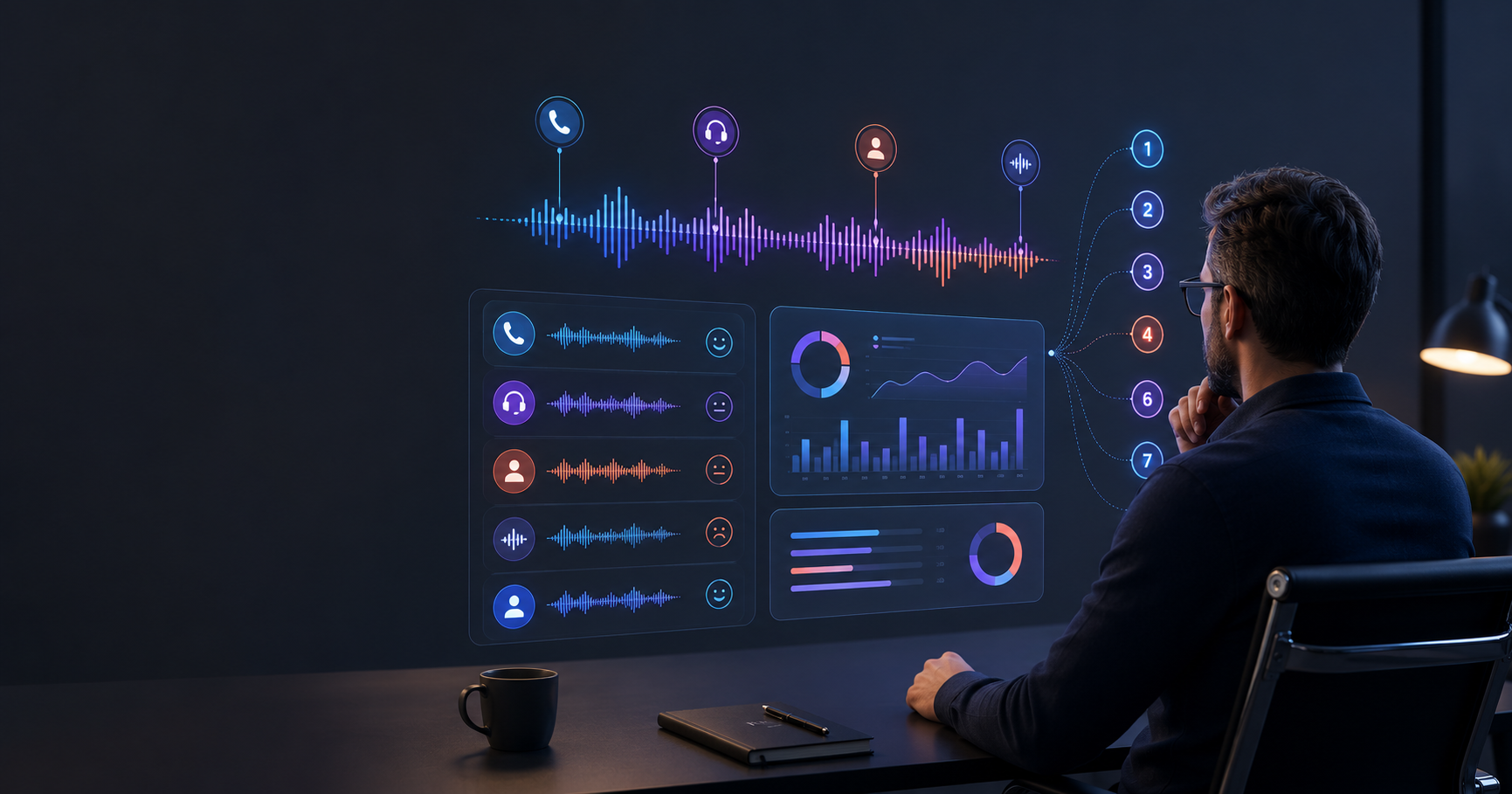
Manual QA: ~1,5%, Robonote: 100% (maybe insert little graphic/diagram)
Most contact centers review somewhere between 1% and 5% of their calls. That means roughly 98 out of every 100 conversations are never heard by anyone in QA. To hear all of them by hand, this team would have needed hundreds of analysts.
Sampling is a reasonable trade-off, but it has real costs:
The team connected Robonote to their existing recording setup. There was no new phone system and agents worked as before.
The most important step was defining what "good" looks like. The team brought their own scorecard, their clients' requirements and their compliance checks and Robonote applied them to every call. It analyzes the meaning of a conversation rather than searching for keywords, so "I want to cancel" and "I don't think this is working for me anymore" are both recognized. Calls can be transcribed and analyzed in over 70 languages, with results delivered in English.
In practice, the daily routine changed:
After a few months the team reported:
The QA team stayed in place but their work changed. Instead of scoring 30 calls a day, analysts now spend their time on coaching and on finding the causes behind the trends, which is work that still needs a person.
Robonote is an analysis platform rather than a phone system. Before deployment, confirm how recordings will be transferred from your telephony provider and how results will connect with your QA, CRM or reporting workflow. It also helps to run your current scorecard alongside the automated scores for a few weeks, so analysts can compare and trust the results.
Best for: BPOs that want full call coverage and client-specific scoring while keeping their current communications stack.
If your QA team is spending most of its time finding calls to review rather than acting on what they hear, automation is likely to help most. If you're running only a handful of agents on a single client, manual review may still be enough for now.
Before making a decision, test the software on a representative sample of your own recordings. The right platform should reduce manual review, give your analysts a clear starting point each day and show you problems that sampling would have missed.
Want to see what your own calls would show? Contact the Robonote team at robonote.io to run a pilot on a sample of your recordings.
You want to elevate your call centre using AI?
Schedule a demo for Robonote
If you want to be a part of changing the way we work using AI, join us!
See our open roles here, we are hiring.
Read relevant article about AI, Robonote and our Founders. You can also find more article on our blog
Robonote is the AI sidekick that helps your team unlock the potential of your data. Start your journey today.